
January 5-9, 2026
Hotel Terrace - Engelberg, Switzerland
The IC3 Winter Retreat 2026 was another one for the books!

More than 80 academics, researchers, partners, and industry practitioners gathered in Engelberg, Switzerland, for three days of technical talks, panels, and discussions. Here are some of the highlights from this year’s retreat:
1. “RANDAO Manipulation in Ethereum” Kaya Alpturer, PhD student, Princeton University
Ethereum uses a system called RANDAO to provide randomness for the network. However, it’s a known issue that if a malicious actor controls the proposers assigned to the last slots in an epoch, they can manipulate that randomness to their advantage.
Kaya and his fellow researchers developed a methodology to calculate exactly how much extra influence an attacker gains based on how much ETH they have staked. Their research shows that by playing strategically, attackers can propose more blocks than their fair share.
Access the research here.
2. “Practical Considerations for Running Blockchain Consensus Protocols” Yacov Manevich, Engineer, Ava Labs
In many consensus models, protocols with rotating leaders are a double-edged sword: they help ensure decentralization, but throughput is affected when nodes go offline. Yacov spoke about addressing this issue by blacklisting failed leaders, different approaches for different consensus protocols, and the unique challenges of reconfiguring each. He also discussed Ava Labs’ future design for Avalanche L1s.
3. “Unraveling the Probabilistic Forest: Arbitrage in Prediction Markets" Oriol Saguillo, PhD student, IMDEA
Researchers conducted an empirical analysis of Polymarket and confirmed $40 million in realized arbitrage profit. The team tackled the O(2^{n+m}) scalability challenge to determine what conditions trigger arbitrage and who is extracting the value.
The findings highlight a major divide between Market Rebalancing (intra-market) and Combinatorial Arbitrage (inter-market). This research was presented at AFT’25.
Read more here.
4. "B-Privacy: Defining and Enforcing Privacy in Weighted Voting" Samuel Breckenridge, PhD student, Cornell Tech
Most DAOs use token-weighted voting, assuming that as long as individual ballots are kept secret, voter privacy is protected. However, new research from IC3 reveals a major flaw: an attacker can often "guess" how individuals voted just by looking at the final tally.
In a joint effort with Arbitrum and Tally, the team introduced B-privacy—a new metric that measures how difficult (and expensive) it would be for an attacker to bribe voters under various scenarios. By strategically adding "noise" to the results, B-privacy provides a mathematical way to make bribery attacks cost-prohibitive.
Read more here.
5. "Arbigraph: Verifiable Turing-Complete Execution Delegation" Ittay Eyal, Technion Professor & IC3 Associate Director
Smart contracts often lack the contextual understanding required for complex scenarios. To make them truly "smart," we need Machine Learning, but on-chain computation constraints make direct ML inference nearly impossible. Arbigraph changes this.
Ittay Eyal presented his students' recent work: a blockchain-based execution delegation protocol. By using a novel dual-graph data structure, Arbigraph achieves:
- Turing-completeness
- Constant-time memory access
- Parallel execution (offering a massive speedup for LLMs)
Deployed on Avalanche, Arbigraph enables decentralized, context-aware decision-making without central authorities.
Read the paper here.
6. “Chainlink DKG” Philipp Schindler, Research Engineer, Chainlink Labs
Philipp detailed the cryptographic mechanics of Chainlink Distributed Key Generation (DKG)—one of the foundations of Chainlink Confidential Compute that enables private smart contracts on any blockchain.
How it works:
- DKG: Trustlessly generates and distributes threshold key shares to the Vault DON.
- Vault DON: Provides decentralized storage of user secrets using threshold encryption for the key shares generated by DKG.
Chainlink Confidential Compute is rolling out this year and will be a key part of the Chainlink Runtime Environment.
Read more here.
Looking for more presentation highlights? Head over to our X account to see our real-time threads and photos from the retreat.
Consensus Deep Dive
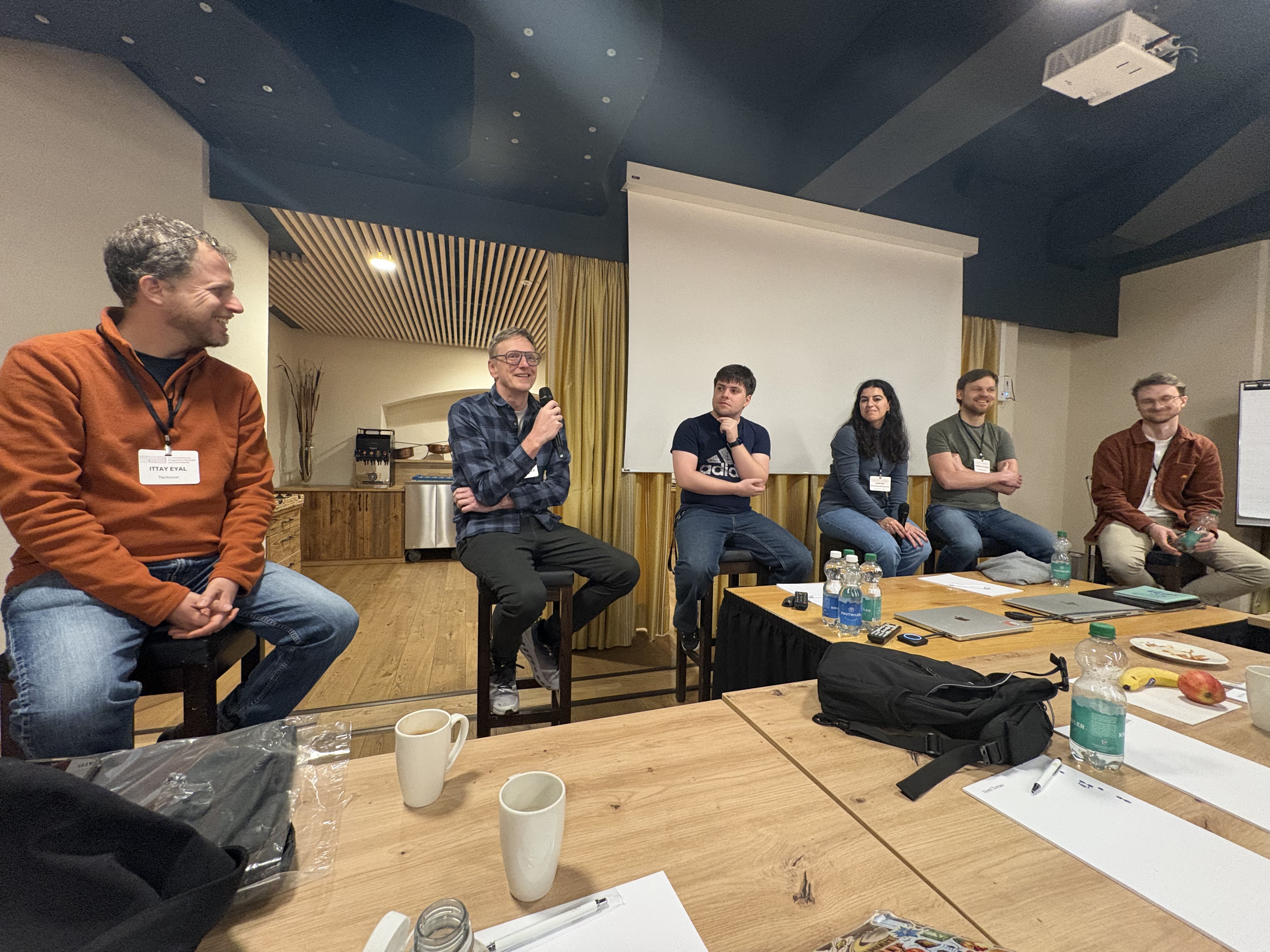
On Day 1, researchers presented the unique consensus mechanisms of Ethereum, Solana, Monad, Avalanche, and Chainlink. The presentations were followed by a panel discussion regarding the tradeoffs of each system.
Interactive TEE Workshop
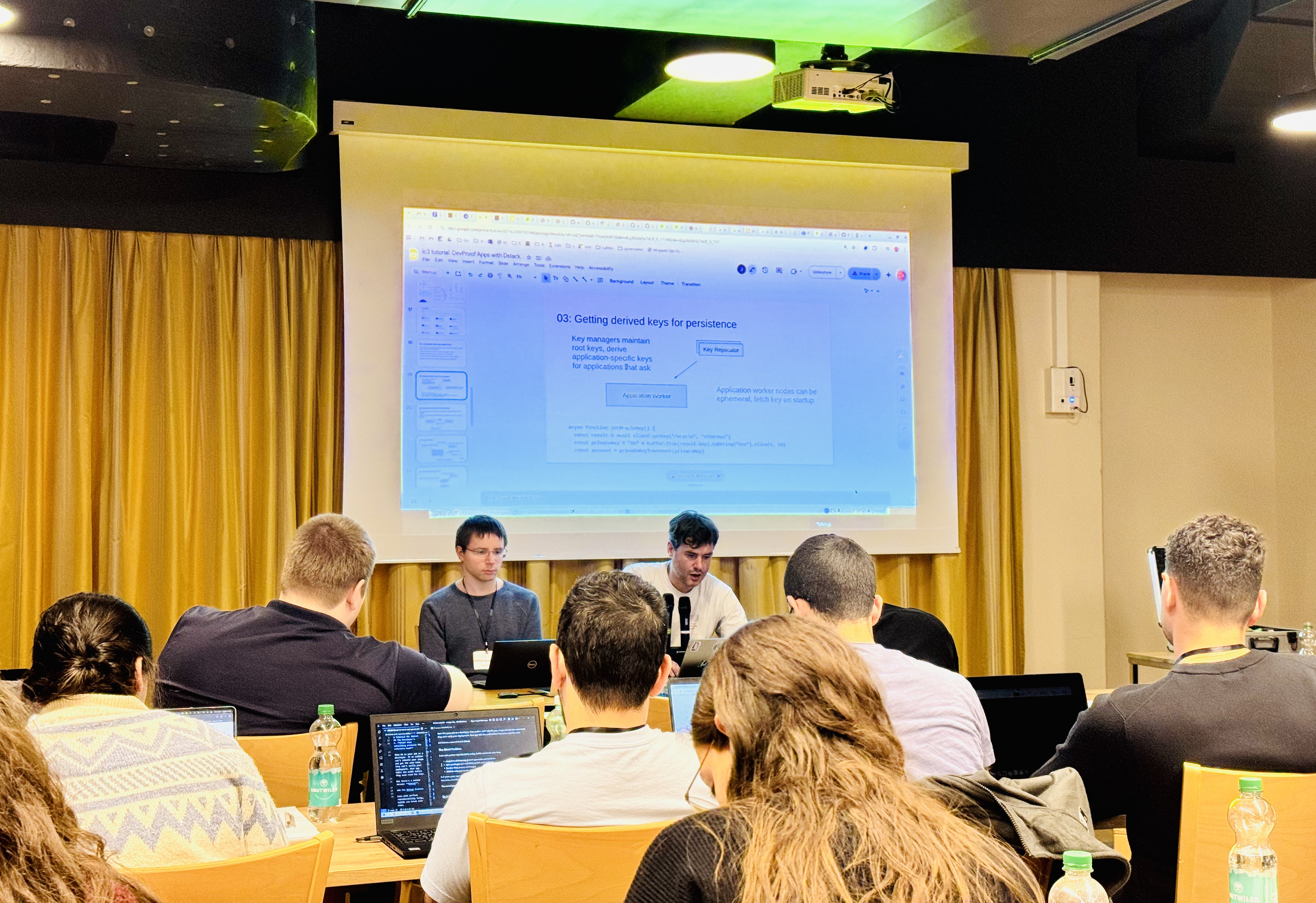
To close out Day 2, IC3 Associate Director Andrew Miller and Cornell Tech PhD student James Austgen led a hands-on workshop focused on Trusted Execution Environments (TEEs). Attendees moved beyond theory, engaging in an interactive session to explore the practical implementation of hardware-based security in decentralized systems.
Snowshoes and Local Dishes
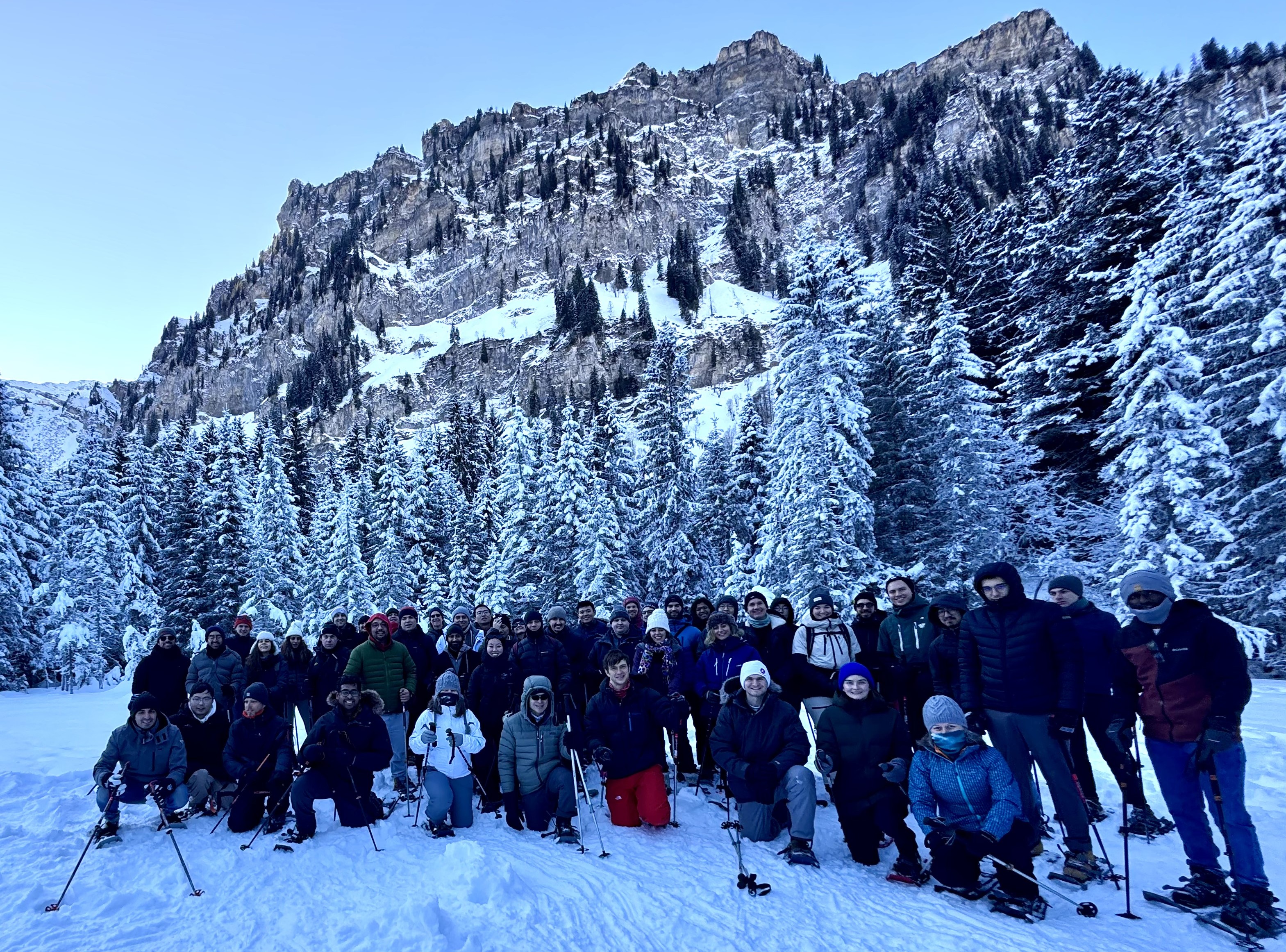
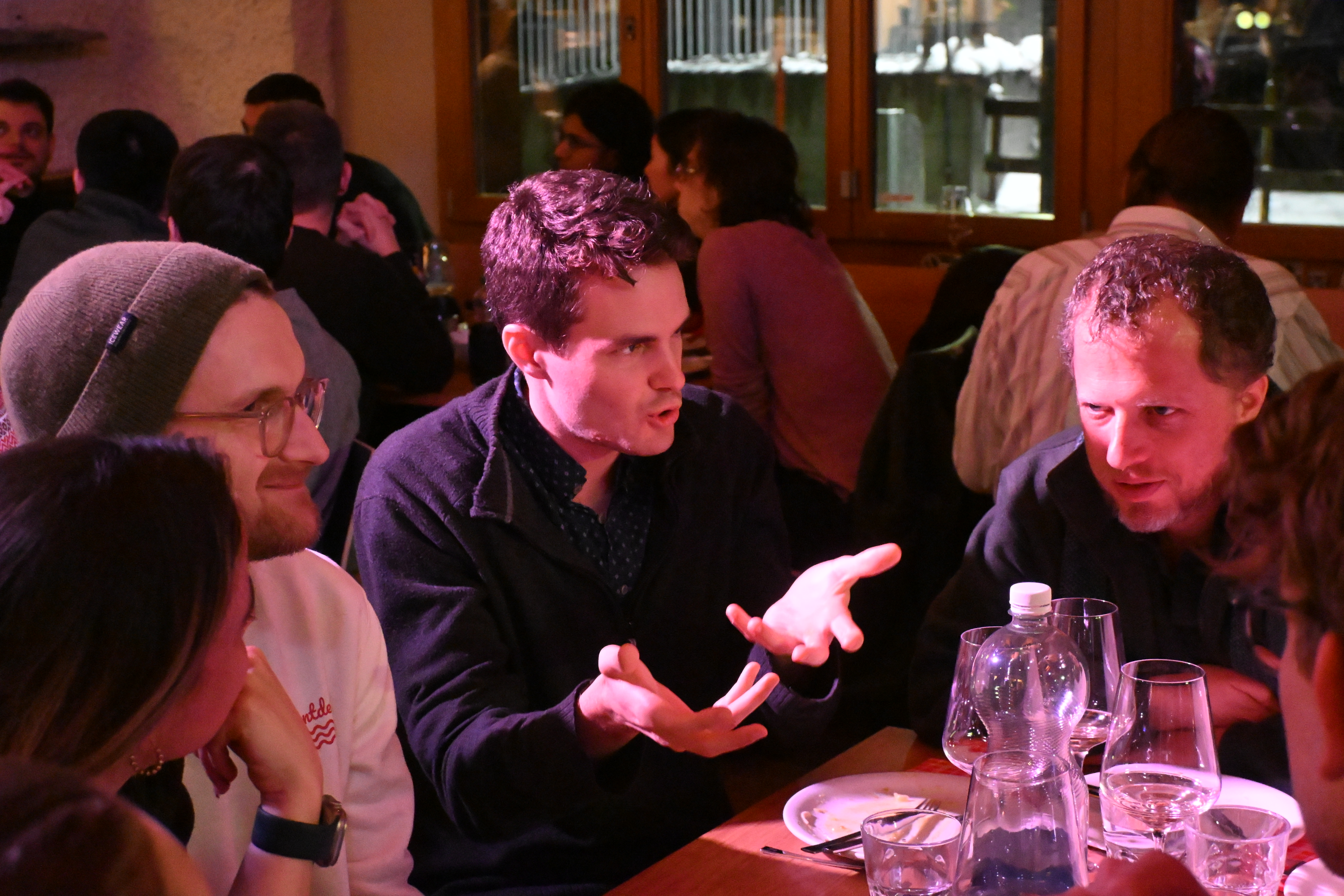
It wasn’t all code and consensus. Retreat attendees took advantage of the mountain setting with a snowshoe trekking excursion. The event concluded with a final dinner at Après Ski Chalet, where guests networked over local dishes.
Thanks to our members and partners who made this year’s retreat a memorable one. We’ll see you in 2027!